




Sciatica and Lumbosciatica: How to Differentiate Them
 Nov 24, 2025
 Clínica Sohail
Pain radiating down the leg is one of the most frequent
reasons for physical therapy consultations. Many people refer to it as
"sciatica," although that is not always the case. Sometimes the pain
begins in the lower back, other times in the gluteal region, and in some cases,
it travels down the entire leg like an unrelenting cramp.
Distinguishing between sciatica and lumbosciatica is
important because each has a different origin and requires a distinct treatment
approach. At our clinic in Fuengirola, we see situations every week that appear
very similar but require different strategies. This article will help you
understand what is happening in your body and when it is the right time to seek
professional help.
What Sciatica Really Is
Sciatica occurs when the sciatic nerve becomes irritated or
compressed at some point along its path. As the longest nerve in the body, it
can cause pain that travels down the leg like a thread carrying discomfort,
tingling, or even a loss of strength.
Most commonly, this irritation originates in the lumbar
region. If you would like to read further on this topic, our article on low
back pain explains why it occurs and which structures are involved. When that
lumbar irritation affects the nerve, the pain extends into the leg. Sciatica is
typically felt as a linear pain running down the back of the thigh or leg and
may be accompanied by tingling, numbness, or weakness.
What Lumbosciatica Is
Lumbosciatica combines two components: lower back pain and
pain radiating into the leg. It does not occur in isolation, but rather as a
blend of discomfort originating in the lower back and spreading down into the
leg.
In our article on lumbosciatalgia, we explain in detail when
this combination occurs and why it is so common. The difference compared to
pure sciatica is that lower back discomfort plays a central role here; while
the leg hurts, the back is also symptomatic.
Why They Are So Frequently Confused
Many individuals arrive for consultation convinced they have
sciatica when, in reality, they are experiencing something else. The body sends
clear signals, but interpreting them is not always straightforward.
One of the most common sources of confusion is piriformis
syndrome. When this muscle becomes excessively tense, it can irritate the
sciatic nerve and cause pain in the gluteal area or the back of the leg. It
closely resembles sciatica, but the origin lies within the gluteal region
rather than the spine. If you have ever felt pain while sitting or a deep ache
in the buttock, you may be interested in our article on piriformis syndrome,
where we explain it in greater detail.
The reverse can also happen: sometimes pain in the back of
the thigh is muscular rather than nerve-related. Hamstring tears, for instance,
produce very localized pain that typically worsens when running or bending
over. Although it presents differently clinically, it can appear similar from
the outside. In such cases, our guide on muscle tears can help you
differentiate between them.
Another frequent cause is a herniated disc. Not all
herniations cause symptoms, but when they irritate the nerve, they can trigger
pain radiating down the leg. To learn more about this process, you can read our
article on herniated discs, where we detail what occurs.
How We Differentiate Them in Consultation
The most valuable information comes from listening to your
story: when the pain started, whether it followed a physical effort, and
whether sitting, walking, standing up, or standing worsens or relieves it. From
there, we observe how your spine moves, which movements reproduce the pain, and
which postures offer relief.
Differentiating sciatica from lumbosciatica is
straightforward when full-body movement is evaluated. The key is not focusing
solely on the leg that hurts, as the origin is usually located a few
centimeters higher.
How We Treat This Type of Pain at Sohail
Although every case requires an individualized path, one
principle remains consistent: this type of pain improves when patient
education, adapted movement, and origin-specific treatment are combined.
When the pain originates in the lumbar spine, we work to
reduce irritation, improve spinal mobility, and restore positions that offload
the nerve. From there, we introduce gentle exercises that help the tissue calm
down and regain function.
If the origin lies in the gluteal area or the piriformis
muscle, the approach changes. Here, we focus on tissue relaxation, pelvic
mobility, and strengthening the gluteus maximus and medius so the area
functions properly without irritating the nerve.
In cases involving significant tension, inflammation, or
prolonged symptoms, we utilize complementary technologies. These tools assist
in reducing nerve irritation and accelerating recovery, but always as a support
to, rather than a replacement for, active movement.
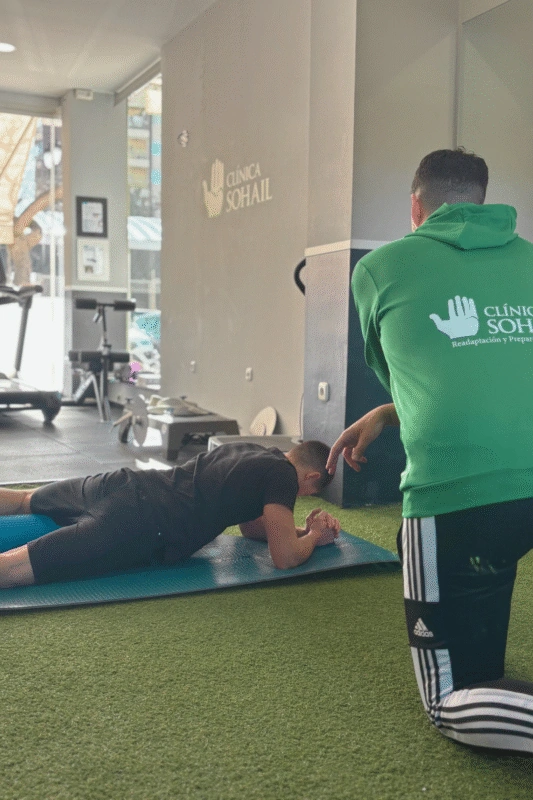
Most importantly, you must understand your injury and not fear movement. The body recovers best when supported and when there is a clear plan for each stage of the process.
When to Seek Help
If pain radiates down your leg, or if you experience
tingling, numbness, or back pain that limits your ability to walk, it is a good
time to consult a professional. Identifying the origin early allows for timely
intervention to prevent the problem from becoming chronic.
Sciatica and lumbosciatica appear similar, but they are not
the same. Understanding where the pain comes from is the first step toward
treating it correctly. At Sohail, we work with you to identify the source,
relieve the pain, and help you regain confidence in your movement, step by step
and without rushing.
Are you experiencing pain radiating down your leg? Request
an evaluation at Sohail Clinic and restore your well-being.