




Lower Back Pain: Causes, Treatment, and How to Recover
 Mar 23, 2026
 Clínica Sohail
Lower back pain is one of the most common reasons for
visiting a physical therapist. Understanding why it occurs and how to properly
address it is key to avoiding relapses and restoring full functionality.
What is Lower Back Pain?
Lower back pain, also known as lumbago, occurs in the lumbar
region—the lower part of the spine. This area is designed to bear loads,
facilitate movement, and adapt to different physical demands. When the balance
between load and capacity is disrupted, pain appears.
It can manifest as:
·
Stiffness upon waking up.
·
Pain when bending forward.
·
Discomfort after sitting for extended periods.
·
A feeling of being "locked" or stuck.
·
Radiation into the glute or leg.
Not all lower back pain shares the same origin or progresses
in the same way. For this reason, a generic approach is ineffective.
Why Lower Back Pain Appears
Lower back pain rarely stems from a single cause. It is
usually the result of a combination of factors:
·
Mechanical Overload: Accumulation of tension due
to a sedentary lifestyle, repetitive movements, or stress.
·
Poor Movement Management: Lack of coordination
between hips, abdomen, and spine.
·
Disc Irritation or Herniation: Involvement of
the intervertebral disc, which can sometimes radiate down the leg.
·
Persistent Lower Back Pain: Sensitization of the
nervous system or physical deconditioning.
Should I Rest if My Lower Back Hurts?
Prolonged, total bed rest does not speed up recovery.
Current clinical evidence shows that dosed movement is an essential part of
treatment. The key lies in adapting the load, not eliminating it completely.
The spine requires progressive stimulation to rebuild tolerance.
Comprehensive Assessment at Sohail Clinic
At our physical therapy clinic in Fuengirola, we address
lower back pain from a holistic perspective. The lumbar region does not
function in isolation; it is part of an integrated system involving the pelvis,
hips, thoracic spine, and breathing patterns.
We evaluate:
·
Hip mobility.
·
Deep core stability.
·
Breathing pattern.
·
Motor control and daily load management.
Improving hip mobility reduces direct stress on the lower
back, while re-educating breathing and motor control allows the nervous system
to organize movement efficiently.
Therapeutic Exercise and Functional Readaptation
Therapeutic exercise is the cornerstone of treatment. It is
not a generic routine, but a structured process that evolves from controlled
mobility to strengthening real physical capacity.
Many relapses occur when pain improves but physical capacity
has not been fully restored. Functional readaptation bridges this vulnerable
gap, enabling the back to handle load normally once again.
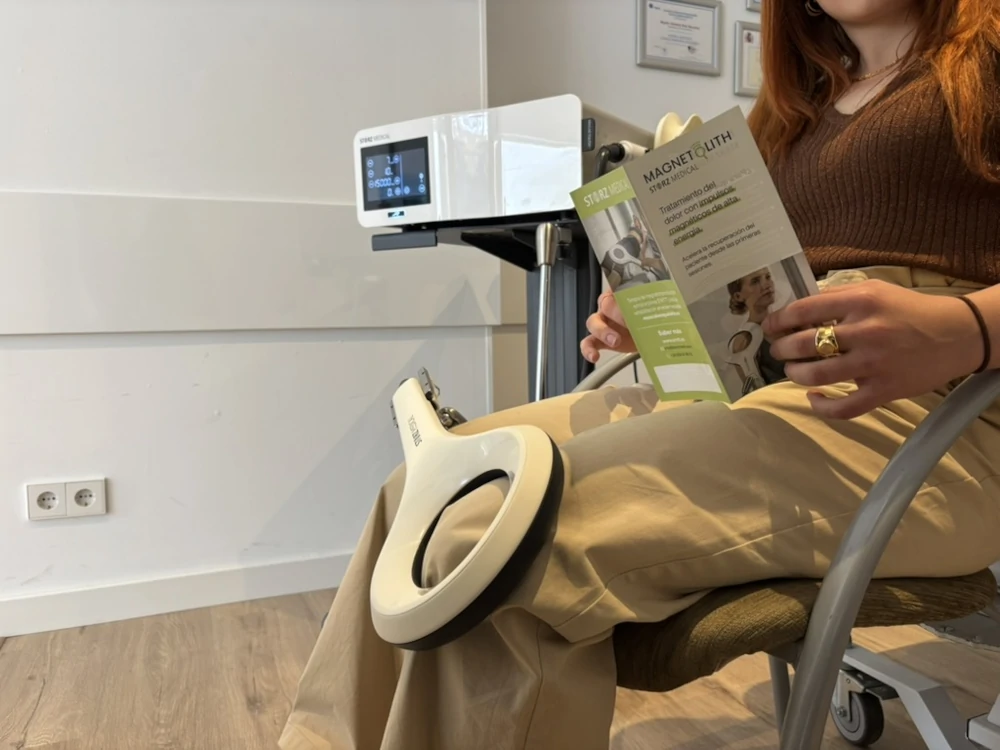
Advanced Technology: Magnetolith
Magnetolith is a high-intensity electromagnetic stimulation
technology that penetrates deep into tissue to trigger profound cellular
activation.
It is particularly useful during inflammatory phases,
persistent muscle spasms, and degenerative conditions, as it reaches deep
tissue layers that manual therapies cannot stimulate with the same intensity.
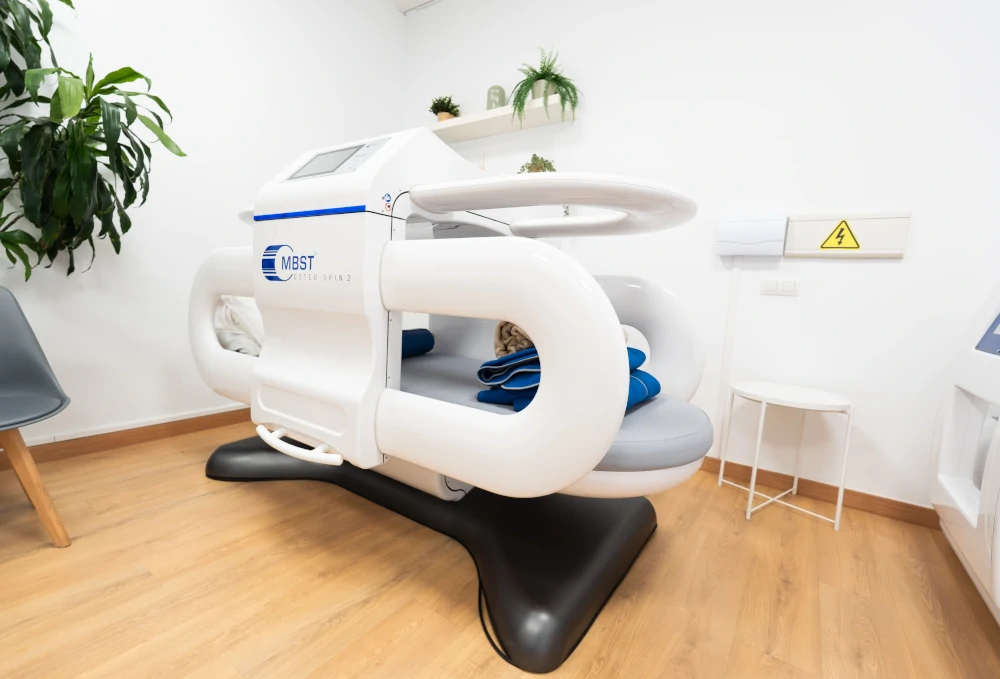
MBST: Nuclear Magnetic Resonance Therapy
Unlike Magnetolith, MBST operates at a cellular level to
support tissue regeneration in joints and intervertebral discs. It is indicated
for:
·
Degenerative disc changes.
·
Facet joint osteoarthritis.
·
Chronic structural wear.
It promotes cellular metabolic activity, enhancing tissue quality over the medium and long term.
How to Prevent Lumbago
Rather than searching for a single "perfect
posture," we focus on movement variability and adaptability. Key
protective factors include:
·
Regular physical activity and adequate strength
training.
·
Sufficient mobility and stress management.
·
High-quality rest.
The back is built to move. Prolonged immobility is often far
more harmful than controlled movement.
Do you suffer from lower back pain? Contact us to schedule a
personalized assessment.